Wednesday, August 2, 2017

Setting the Stage for Writer's Workshop


Welcome to "The Owl Spot" as we set the stage for writer's workshop.  This is my 2nd installment of my Writer's Workshop Wednesday posts, and it's one of my favorites!  

As teachers, we (usually) enjoy decorating and organizing our rooms for a new school year.  Sometimes it gets overwhelming with all of the photos circulating on Pinterest and Facebook.  I like to make a checklist, though, to help me stay focused (grab the checklist at the end of this post for free!).

One area on my checklist is to set up my content related areas, one of them being my Writing Center.  In this center, I have an interactive bulletin board for students to track their writing process and a shelf with writing tools for my students to use (different kinds of paper, checklists, dictionaries, editing pens, etc.).


For today, I wanted to focus on the Interactive Writing Process Board (or display). 

One set of mini lessons I teach after I go over procedures for Writer's Workshop is what the Writing Process is.  It's important that students know what happens in each stage, as well as where they are in the process as they are writing.  

Creating an interactive board doesn't have to be as hard as it sounds.  You just need a way for students to visually track their own process.  It also makes it easy for you to catch a "status of the class" just by looking at your board/display.  

You want to make sure you have these items on your board/display:

* Stages of the writing process
* Short explanation of what happens in each stage - this can be either on the board/display or somewhere nearby.
* Movable pieces with student names on them.  These should attach to the different writing process stages. There's so many different ways you can do this!

1. Clip chart - students move their clothespins to the stage they are currently working on with their writing. Super easy!
2. Magnets - keep your writing process stages on a magnetic surface. Use dollar store/die cuts, etc. with student names on them for your movable pieces.  Just add a magnet to the back!
3. If using a true bulletin board, you can use any movable pieces. Students attach them to the stage with push pins!

Here's some picture ideas...


These are the pieces to a writing process board. 


The posters explain each stage, while the students use the clip chart to show where they are in the process. Super easy to set up, even if you don't have much board/wall space.


Here's one that I used a magnetic surface:


Since my theme was Sea Turtles that year, my students had magnetic name pieces (sea turtle eggs) that traveled to each of the stages of the writing process. This year I had to display my explanation posters in a different area.

Here's another one...


This one goes with my current Alice in Wonderland theme. Students have their writing process posters above the "Tea Party."  On the first day of school, students design their own teacups to use as their movable piece. Because this is on the wall, they use sticky tack to move their pieces on the corresponding teacup.

I've seen so many creative ways to do this! One teacher used a dog theme, and printed out dog bowls, one for each stage. Students had bones with their names on them to move to the different bowl.  Another favorite was a race track. The Writing Process stages were around the track, and students moved their race cars around!

Have fun making your classroom setup meaningful to what you are going to teach your students! 

I'd love to hear how you display your writing process so your students can track their writing!


Thanks for reading!
Martha from "The Owl Spot"


Wednesday, July 26, 2017

Writer's Workshop Wednesdays


I love teaching writing!

I don't hear many teachers saying this, so I know I'm in the minority here.  I think I like teaching writing because I love to write.  It's something that I've loved doing since I was in third grade.  I remember writing a story about an elephant running away from the circus, and thinking that I wanted to write books when I grew up.

So here I am, teaching 5th graders how to write.

How?  Through Writer's Workshop.

After going through some pretty intense training for Writer's Workshop when I taught at Tigerville Elementary School in SC, and then being a part of the Upstate Writing Project with Clemson, I'm a firm believer that Writer's Workshop works. It's not just another program that was thrown at me to figure out and implement immediately; it's a well-researched way to build a community of lifelong writers in your classroom.


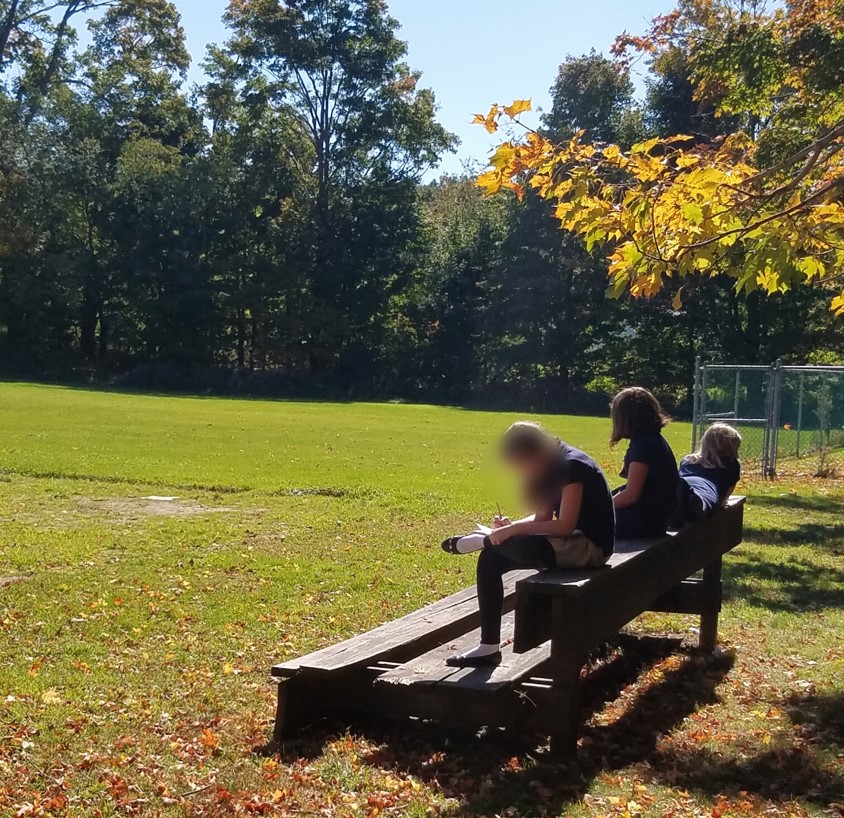
Enjoying writing outdoors

So, what is Writer's Workshop?

1. A time when students pretty much get to make choices about what they write.

2. Mini lessons

3. Time to write

4. Talking about our writing

5. Teachers modeling writing

6. Using Mentor Texts as examples

7. Sharing and celebrating the authors in all of us


It's my favorite time of the day (my students say the same thing)!  And once you understand how it all works, I know you'll love it, too.

Check back with me every Wednesday for Writer's Workshop Wednesday. I plan on posting helpful tips and hints for being successful with this in your class. I promise each Writer's Workshop Wednesday post will have you excited to try something new with your students!

I'm giving away a couple customized Writing Process Clip Charts - leave a comment below about writing in your classroom (a moment of success or an area of frustration is fine).  Make sure to leave your email address, too, so I can contact you!  I'll choose the winners by Saturday, July 29. 

Martha from "The Owl Spot"


Tuesday, July 4, 2017

So is independent reading really that important?

Yes, yes, and yes!

I know, I've been there, too. My schedule is jam packed, I have no idea how I'm going to spend extra time getting my students ready for those tests, and we have so many pull outs and interruptions that I'm lucky to get all of my content covered.  The last thing on my mind is free reading time.

But that's what my students (and yours) need the most, especially if their vocabulary fluency is low.  They need to be immersed in good vocabulary, and what better place than in good books.  

"[A] study found that the amount of time students spent reading independently was the best predictor of vocabulary development and reading achievement gains. The research indicates that independent reading is probably the major source of vocabulary acquisition beyond the beginning stages of learning to read." (Individualized Daily Reading Research, Center for the Collaborative Classroom).  

This study goes on to explain that the amount of time students are independently reading has a direct correlation to their amount of vocabulary knowledge and understanding. Books are so important!

After reading this, I've decided that I have to put more 

of a priority on independent reading in my classroom.  
I want it to be meaningful, not just something we use 
as a time filler.  But I don't want my students to feel like 
I'm forcing them to read. I want them to want to read.  

There are many student motivators out there, some better than others.  I'll apologize ahead of time here, but I'm not a fan of AR (gasp, I know!). While there are many good points to the program, I don't like giving my students the only reason for reading is to take a test and earn points.  We don't do that as adults. We read because we want to - either for fun or for information.  If we are asked questions about what we're reading, we can usually pick up the book and find the answers we need.  

Last year, I managed to be able to take my students to our local library once a month to check out books.  They loved it!  There were books there that I didn't have on my shelves, and they were around other people who really loved to read.  The bus rides back to school were usually pretty quiet as they were beginning to devour their adventures. Maybe checking into local library trips is something you'd like to do - the ladies at the library were very excited to help us make this a meaningful experience.  My students had to obtain their own library card with their parents.  

One of my goals this summer is to read "The Book Whisperer" by Donalyn Miller.  I've heard many teachers give raving reviews of how this book has changed their reading instruction. Have you read it? What is one of your                                most important/memorable take-a-ways?

  Martha